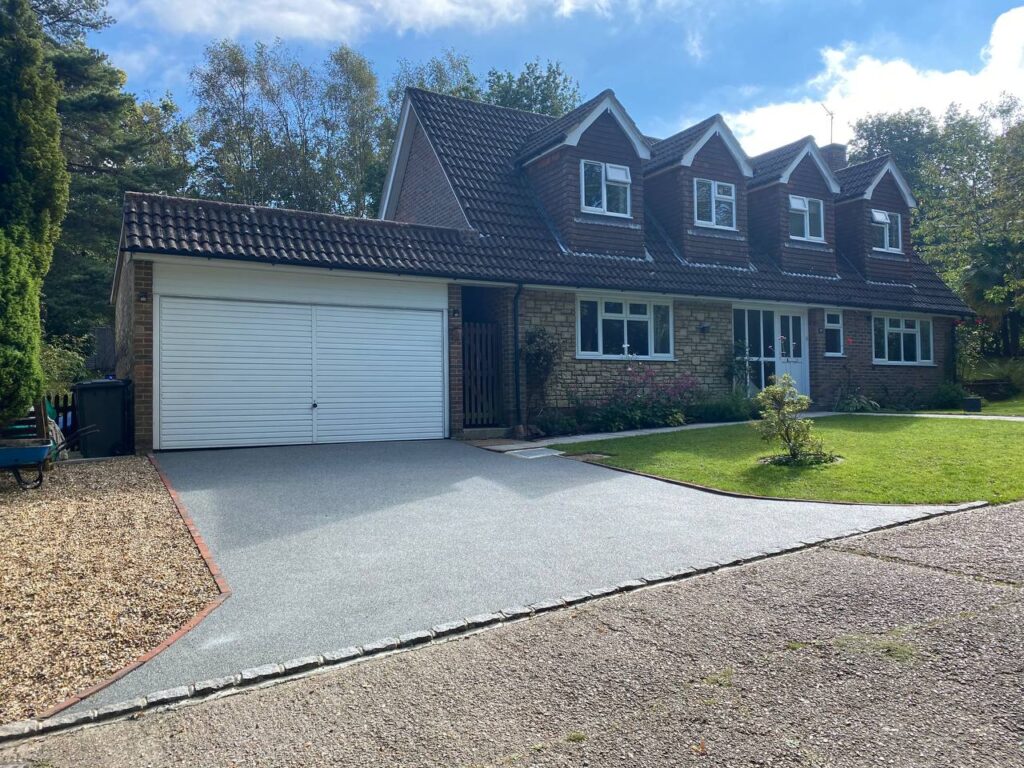
A patio should do more than provide an attractive area at the back of a property. It needs to be comfortable to walk across, straightforward to maintain and suitable for the way the garden is actually used. When an existing patio becomes uneven, visually tired or awkward to move around, the surface itself can begin limiting the usefulness of the outdoor space.
For homeowners in Epping Forest, Essex, resin bound surfacing can provide a practical option when creating or improving a patio. Its smooth, continuous finish can work particularly well where easy movement, clearly defined spaces and a consistent appearance are priorities. However, the quality of the finished patio depends on much more than the surface material alone. Preparation, levels, drainage, edges and the condition of the supporting base all contribute to how successfully the area performs.
Why Can Resin Bound Surfacing Be a Practical Choice for a Patio?
Resin bound surfacing is created by combining selected aggregate with resin before the mixture is laid and finished as a continuous surface. This produces a very different appearance and feel from patios constructed from individual paving units.
For patio areas, that continuous finish can provide several practical advantages. There are fewer joints interrupting the surface, transitions can be planned carefully, and the patio can be shaped around the available garden space. When correctly prepared and installed, it can create an outdoor area that feels connected, usable and relatively straightforward to maintain.
A Smooth Surface Can Make the Patio Easier to Use
One of the most noticeable characteristics of a resin bound patio is its relatively smooth and consistent finish.
Traditional paving can become difficult to use when individual sections move, settle or create uneven transitions. A properly installed resin bound surface provides a more continuous area underfoot.
This can make everyday movement around tables, chairs and other garden features feel more straightforward.
A Continuous Finish Reduces Interruptions Across the Patio
Individual paving materials naturally create joints throughout the surface.
Resin bound surfacing creates a more visually continuous finish.
For a patio, this can help the area feel less fragmented, particularly where it connects several parts of the garden.
The practical benefit is that the usable surface can be planned as one coordinated space rather than appearing as a collection of separate paving sections.
Patio Furniture Benefits From a Consistent Surface
Tables and chairs work best when they can be positioned on a reasonably even surface.
Where an older patio contains significant variations in level, furniture can become awkward to arrange.
A carefully constructed resin bound patio can provide a consistent surface across seating and dining areas.
Good preparation remains essential because the resin finish cannot compensate for an unsuitable or unstable supporting base.
Resin Bound Surfacing Can Suit Regular Outdoor Living
Modern patios are frequently used as extensions of everyday living space.
They may accommodate outdoor furniture, dining areas, planters and routes between different parts of the garden.
A practical patio therefore needs to cope with regular pedestrian use while remaining comfortable and easy to navigate.
Resin bound surfacing can provide a suitable solution where a clean, continuous area is wanted for these everyday activities.
The Patio Can Be Designed Around How the Garden Is Used
A useful patio should reflect the way people naturally move through the garden.
The position of doors, paths, lawns and other outdoor features can all influence the most appropriate shape.
Resin bound surfacing can be formed around a planned layout rather than requiring the patio to be treated as a simple rectangle.
This provides flexibility when creating a surface that responds to the available space.
Curved Patio Edges Can Be Incorporated
Not every garden benefits from straight boundaries.
A patio may need to follow planting areas, lawn edges or another existing feature.
Resin bound surfacing can accommodate carefully designed curves, allowing the finished area to follow the intended garden layout.
This can be particularly useful where the objective is to integrate the patio naturally with surrounding landscaping rather than making it appear separate from the rest of the garden.
Defined Edging Helps Create a Finished Patio
Although the resin surface itself is continuous, suitable edging remains an important part of the installation.
Edges define the perimeter and provide a clear transition between the patio and neighbouring areas.
They can also help distinguish different sections of the garden.
Good edge planning contributes both to the appearance of the finished patio and to the quality of the installation.
Resin Bound Patios Can Connect With Garden Paths
A patio rarely exists completely independently from the rest of the outdoor space.
There may be a path leading towards another part of the garden or a route connecting the patio with an entrance.
Using a coordinated resin bound surface can create a consistent transition between these areas where appropriate.
This can help the garden feel more connected while making the routes through it easier to identify.
Fewer Surface Joints Can Simplify Everyday Maintenance
Patios constructed from individual units contain numerous joints.
These joints can require ongoing attention as the area ages.
A resin bound patio has a continuous surface without the same pattern of joints running throughout the main area.
Routine maintenance is still necessary, but the absence of numerous paving joints can make the surface more straightforward to manage.
No Patio Surface Is Completely Maintenance-Free
It is important to have realistic expectations.
Resin bound surfacing still requires appropriate care.
Leaves, soil and general garden debris should not simply be allowed to accumulate indefinitely, particularly in areas surrounded by trees and planting.
Routine cleaning helps preserve the appearance of the patio and prevents debris from remaining across the surface.
The advantage is practical manageability rather than an unrealistic promise of zero maintenance.
Good Drainage Is Essential to a Practical Patio
A patio that regularly retains standing water can become inconvenient regardless of how attractive its surface appears.
Drainage therefore needs to be considered as part of the complete installation.
Resin bound systems can provide a permeable surface when installed as part of an appropriate permeable construction.
However, the complete build-up, ground conditions, levels and surrounding areas all need to be considered rather than assuming the surface material alone will resolve every drainage issue.
Surface Levels Influence How Water Behaves
The finished patio should relate properly to the surrounding garden.
Incorrect levels can cause water to move towards areas where it is unwanted or create low points where moisture collects.
Before resin bound surfacing is installed, the existing area should therefore be assessed carefully.
Good level planning helps the patio work as part of the wider garden rather than creating a visually attractive surface with unresolved water-management problems.
Existing Drainage Problems Should Be Addressed First
If an old patio regularly develops puddles, simply covering the area with a new surface does not necessarily address the reason.
The problem may involve settlement, inadequate falls, an unsuitable base or surrounding ground levels.
These factors should be understood before the new patio is constructed.
Professional preparation is valuable because it allows the cause of the existing problem to be addressed rather than hidden beneath a new finish.
The Base Is Critical to the Finished Result
The visible resin bound surface is only the upper part of the patio construction.
Its performance depends heavily on what supports it.
A weak, unstable or unsuitable base can affect the surface above regardless of the quality of the resin and aggregate.
This is why professional installation begins with assessing the existing area and determining what preparation is required before surfacing starts.
Resin Bound Surfacing Cannot Correct Major Base Failure by Itself
An uneven existing patio can sometimes make a new continuous surface appear particularly appealing.
However, resin should not simply be treated as a material that can be laid over every damaged area without preparation.
If the underlying surface is moving, badly cracked or structurally unsuitable, those issues need to be addressed.
The new patio will only be as dependable as the construction supporting it.
Existing Surfaces Need to Be Assessed Individually
Some existing areas may provide a suitable starting point for further preparation, while others may require more extensive work.
There is no single answer that applies to every old patio.
Condition, stability, levels and drainage all matter.
Professional assessment establishes whether the existing construction can form part of the new installation or whether another approach is required.
Proper Preparation Helps Create a Consistent Finish
A resin bound patio is visually unforgiving of poor preparation.
Because the finished surface is continuous, inconsistencies beneath it can affect the overall result.
Careful preparation creates suitable levels and a stable foundation before the final mixture is installed.
The preparation stage may be less visible than the finished surface, but it is fundamental to the quality of the patio.
A Resin Bound Patio Can Improve an Uneven-Looking Garden Area
An older outdoor area may contain several materials added at different times.
Sections of paving, repaired areas and disconnected paths can make the garden look fragmented.
Where the underlying construction can be prepared appropriately, resin bound surfacing can create a more coordinated appearance.
This can help turn several visually disconnected areas into a patio that feels deliberately planned.
The Surface Can Help Define an Outdoor Seating Area
A patio often works best when its purpose is immediately clear.
A continuous surface can visually define where seating and outdoor furniture belong without necessarily requiring physical divisions throughout the area.
This can be useful where the garden needs an obvious social or relaxation space while retaining an open layout.
The patio becomes a functional zone rather than simply an area of hard surfacing.
Dining Areas Need Sufficient Usable Space
The practical value of a patio depends partly on whether furniture can be used comfortably.
A poorly planned area may technically accommodate a table but leave little space for chairs or movement around it.
When designing a resin bound patio, the usable dimensions should therefore be considered before installation.
Planning around the intended use produces a more functional result than simply surfacing the largest available area.
Routes Around Furniture Should Be Considered
Movement through the patio is easily overlooked during design.
People may need to walk between the property and garden while furniture is in use.
If these natural routes are not considered, chairs and tables can repeatedly obstruct circulation.
A well-planned resin bound patio can incorporate adequate movement space so that the surface works effectively during normal everyday use.
Changes in Level Need Careful Planning
Not every garden is naturally level.
Some patios need to connect areas at different heights or work with existing changes in the surrounding ground.
These transitions should be considered before surfacing begins.
Trying to resolve significant level differences only at the final surface stage can compromise the practicality of the area.
Good design begins with the underlying levels and builds the patio around them.
Resin Bound Surfacing Can Help Create Clear Transitions
A patio may meet lawn, paths, planting areas or other surfaces.
The points where these areas connect affect both appearance and usability.
Carefully planned transitions can help reduce awkward edges and create a clearer relationship between different parts of the garden.
Resin bound surfacing offers design flexibility, but these transitions still need to be properly detailed during installation.
Colour and Aggregate Choice Can Influence the Finished Character
Resin bound surfacing is available in different aggregate appearances.
This allows the patio to be planned around the general character of the property and garden.
However, the most practical choice is not simply about selecting a particular appearance.
The overall design, borders, shape and relationship with surrounding surfaces should be considered together so that the patio feels integrated rather than treated as an isolated feature.
A Consistent Surface Can Make Smaller Patios Feel Less Fragmented
Where available garden space is limited, excessive changes in material can make the area feel divided.
A continuous resin bound finish can create a clearer visual surface.
This does not physically increase the dimensions of the patio, but it can help make the available space feel more coherent.
Good layout planning remains important so that the surface is not simply attractive but genuinely useful.
Larger Patios Need Thoughtful Zoning
A larger patio can benefit from having different functions without necessarily requiring several different surface materials.
Furniture placement, borders and the shape of the installation can help create distinct areas for seating, dining and movement.
A consistent resin bound finish can then connect these zones.
This provides flexibility while maintaining an organised overall appearance.
Patio Borders Can Add Definition Without Breaking Up the Main Surface
Borders can be incorporated to help frame the patio or distinguish it from surrounding areas.
Used carefully, they can add definition while allowing the main resin bound area to remain visually continuous.
The border design should form part of the installation planning rather than being treated as an afterthought.
This helps create a more deliberate and finished result.
Resin Bound Surfacing Can Work Well With Contemporary Garden Layouts
A continuous surface can complement gardens where clean transitions and clearly organised spaces are priorities.
The material can be shaped around the design and used to connect different functional areas.
However, the practical qualities of the installation remain more important than simply creating a particular appearance.
Levels, drainage, preparation and usable space should always guide the design.
It Can Also Suit More Traditional Garden Arrangements
Resin bound surfacing does not have to create an overly modern appearance.
Aggregate choice, edging and layout can all influence how the finished patio relates to the surrounding garden.
A carefully planned installation can therefore be used where a softer, more understated finish is preferred.
The objective should be to create a patio that feels appropriate to the property rather than following a standard design.
A Practical Patio Should Be Designed for Everyday Movement
A patio can look impressive immediately after installation but still be awkward to use if movement has not been considered.
The location of doors, paths, furniture and garden access all affect how people cross the area.
A successful design provides enough usable space for these everyday activities.
Resin bound surfacing supports this approach by creating a continuous surface that can be shaped around the required layout.
The Relationship With the Property Matters
The patio should not be designed independently of the building it serves.
Access points, existing ground levels and the way people move between the property and garden all influence the appropriate layout.
The surface should feel like a useful extension of the outdoor area rather than a disconnected section of hard landscaping.
Careful planning at the beginning helps achieve this relationship.
Future Garden Use Is Worth Considering
Gardens change over time.
Furniture may be rearranged, planting areas can develop and the way a household uses its outdoor space may evolve.
A practical patio should provide enough flexibility to accommodate reasonable future changes.
Creating a well-proportioned, continuous surface can provide more options than designing the area too closely around one temporary arrangement.
Resin Bound Surfacing Can Support a Low-Clutter Design
Numerous paving patterns, joints and changes of material can sometimes make a patio feel visually busy.
A continuous resin bound finish offers an alternative where a simpler surface is preferred.
This can allow furniture, planting and other garden features to provide the visual interest instead.
The result can be an outdoor space that feels organised without requiring an overly complicated surface design.
Existing Patio Problems Should Guide the New Design
When replacing or improving an old patio, it is useful to identify exactly what did not work about the previous arrangement.
Was the surface uneven? Did water collect in particular areas? Was the seating space too small? Were routes through the garden awkward? Did numerous joints make maintenance inconvenient?
Answering these questions can help ensure that the new resin bound patio solves practical problems rather than simply changing the appearance.
Signs an Existing Patio Could Benefit From Improvement
A patio may be worth reassessing where:
- the surface has become noticeably uneven;
- different sections have settled at different levels;
- the layout makes furniture difficult to arrange;
- paths and patio areas feel disconnected;
- the surface is awkward to move across;
- standing water repeatedly develops in particular areas;
- numerous joints make maintenance more involved;
- the available space is not being used effectively;
- the patio no longer fits the way the garden is used;
- the area looks fragmented after several previous alterations.
These signs do not automatically mean resin bound surfacing is the only suitable solution. They help identify the practical issues that a new patio design should address.
Installation Quality Matters as Much as Material Choice
Choosing resin bound surfacing is only one part of creating a successful patio.
Preparation, base construction, levels, drainage, mixing, installation and finishing all influence the final result.
A high-quality surface material cannot compensate for inadequate groundwork.
Professional installation therefore focuses on the complete construction rather than treating the resin finish as an isolated layer.
Why Professional Assessment Matters
Every patio area has different dimensions, existing surfaces, ground conditions and connections with the surrounding garden.
Professional assessment allows these factors to be considered before deciding how the resin bound patio should be constructed.
It can identify unsuitable existing areas, drainage considerations, level changes and practical layout requirements.
This provides a much stronger basis for installation than simply selecting a finish and attempting to make it fit the existing space.
Resin Bound Patios in Epping Forest, Essex
At Epping Forest Resin Driveways, we understand that a patio needs to be practical as well as visually appealing. The quality of the finished area depends on how successfully the surface, groundwork, levels, drainage and layout work together.
A professionally installed resin bound patio can provide a smooth, continuous outdoor surface designed around seating, movement and the wider garden. Where an existing patio is being replaced or improved, the underlying area should first be assessed so that any existing problems are addressed rather than simply covered.
For properties in Epping Forest, Essex, careful planning can help create a resin bound patio that works naturally with the available outdoor space and the way it is intended to be used.
Conclusion
Resin bound surfacing can create a more practical patio when the complete area is designed and constructed around everyday use. Its smooth, continuous finish can make movement easier, provide a consistent surface for outdoor furniture and help connect seating areas with paths and other parts of the garden.
However, the resin surface itself is only part of the solution. A successful patio depends on suitable groundwork, stable construction, appropriate levels, drainage and a layout that reflects how the outdoor space will actually be used.
Rather than simply covering an old or inconvenient patio, the aim should be to understand its existing problems and create a surface that addresses them properly.
If you are considering a resin bound patio for your property in Epping Forest, Essex, contact Epping Forest Resin Driveways. We can assess the existing area and recommend an appropriate resin bound surfacing approach based on the layout, condition and intended use of your outdoor space.
Call us on: 01992 927293
Click here to find out more about Epping Forest Resin Driveways
Click here to complete our contact form and see how we can help with your driveways.